
The product
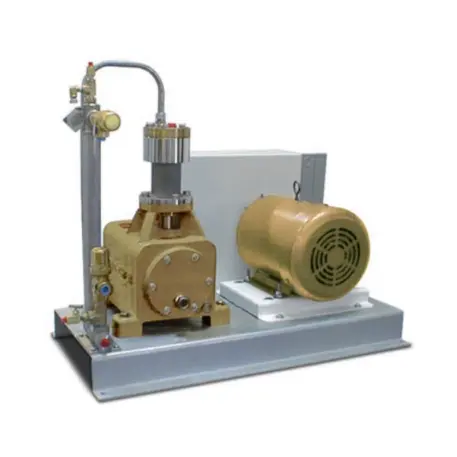
The Cryogenic Cylinder Filling Pump P1100, by Nikkiso ACD, serves carbon dioxide cylinder filling and nitrous oxide cylinder filling. It operates with a flow rate of 1.9 – 6.1 gpm (7.2 – 23.1 lpm) and a maximum working pressure of 1,000 psi (69 bar).
How the Cryogenic Cylinder Filling Pump P1100 works
The P1100 has a vertically positioned floating piston. As a result, the pump offers longer life.
A large piston diameter and a longer pump stroke mean slower speeds. This way, operation is smooth.
The drive is splash oil lubricated. Therefore, it extends pump life and minimizes maintenance requirements.
Applications
- Carbon dioxide cylinder filling
- Nitrous oxide cylinder filling
Liquids pumped: carbon dioxide (CO2) and nitrous oxide (N2O).
Features and Benefits
- Simple cold end design assembly, easy maintenance
- Pump packing is easily adjusted through a large access port, which allows for extended packing life
Typical Scope of Supply (Skid)
- Cold end and drive assembly, TEFC electric motor
- Galvanized steel base plate with drive and guard
- NEMA 1 pushbutton starter
- Surge chamber
- Relief valve and burst disc
- Pressure gauge and snubber
- Safety bypass relief valve arrangement automatically returns liquid to tank at 1,000 psi (69 bar)
- Oil lubricated drive end (oil shipped loose)
Nitrous Oxide Service
The following applies to pumps intended to be used in nitrous oxide service.
Liquid nitrous oxide is a potentially dangerous fluid and must be handled with extreme care. See Compressed Gas Association standard CGA G-8.3-2016 for further information.
Under certain combinations of temperature and pressure, nitrous oxide can explosively decompose with serious consequences. In addition, nitrous oxide is an oxidizer that actively supports combustion. For this reason, nitrous oxide handling equipment must be cleaned for oxygen service.
Design and construction of storage and piping systems for pumping liquid nitrous oxide must assure material compatibility and prevent loss of prime or dry running of pumps. Nitrous oxide is also an active solvent for many materials, so material compatibility must be confirmed before use. For additional historical information on hazards associated with nitrous oxide decomposition, refer to Chemical Safety Board report number 2016-04-I-FL, dated February 2017.
request quote